


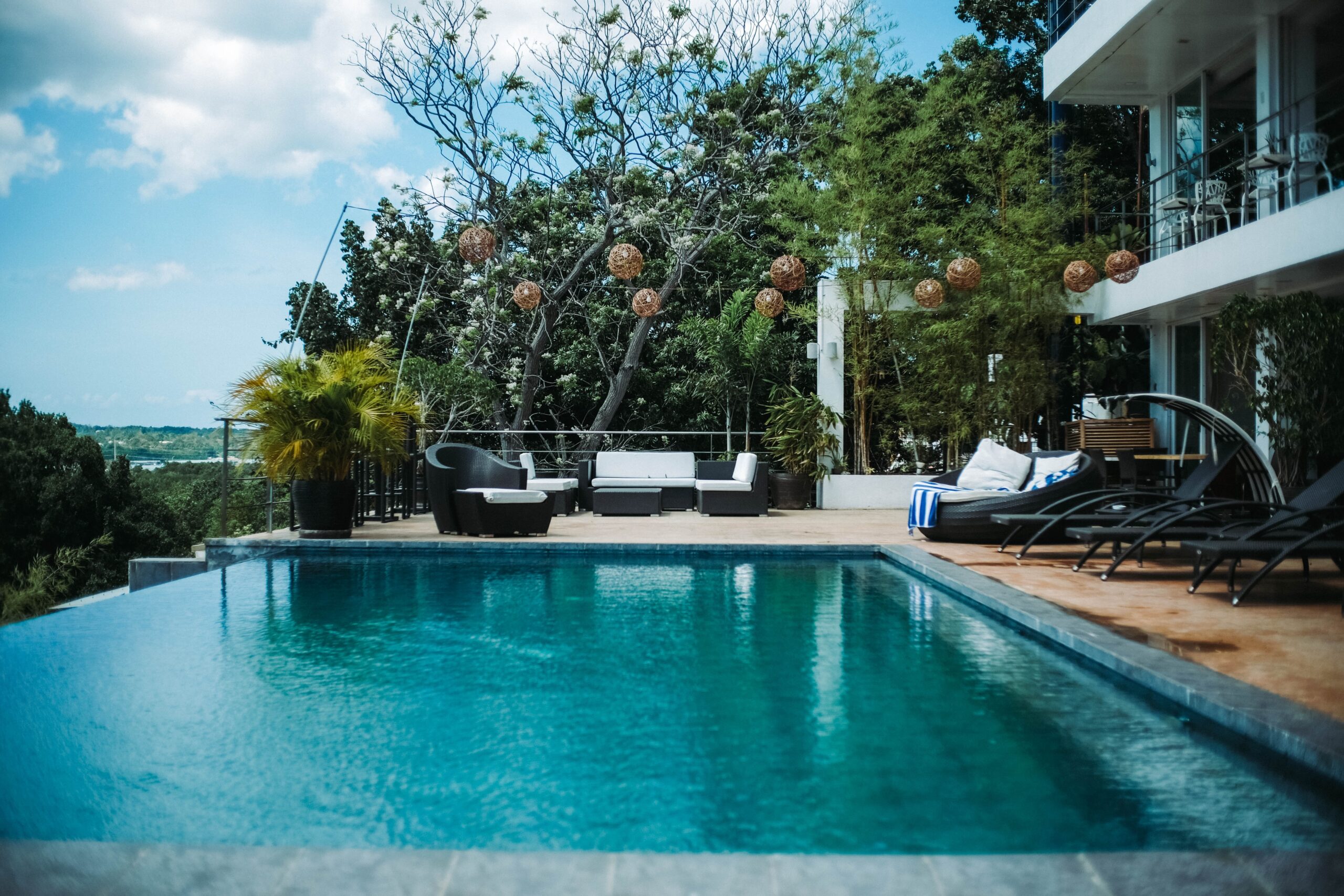
A swimming pool should be a place to relax—not a place where the constant humming, buzzing, rattling, or whining of a pool pump takes over your backyard.
If your pool equipment is located near a patio, bedroom, outdoor kitchen, or neighboring property, even normal pump noise can quickly become annoying. Fortunately, there are several effective pool pump noise reduction methods that can make your equipment significantly quieter without replacing your entire pool system.
The key is determining where the noise is coming from before choosing a solution.
In this guide, we’ll explain the most common causes of noisy pool pumps, how to reduce pool pump noise, when a pool pump soundproofing enclosure may help, and how variable-speed pumps can contribute to a quieter backyard.
Why Is My Pool Pump So Loud?
Every swimming pool pump produces some noise. An electric motor is spinning an impeller at high speed while moving thousands of gallons of water through your filtration system.
However, excessive noise isn’t always normal.
Before attempting to soundproof your pool pump, listen carefully to the type of sound it is producing.
Common sources include:
Motor noise: Pool pump motors naturally produce a continuous humming or mechanical sound while operating.
Vibration: Motor vibration can transfer into a concrete equipment pad, plumbing, fence, or nearby structure and amplify the noise.
Cavitation: Restricted water flow can cause bubbles to form and collapse inside the pump, sometimes creating a grinding or rattling sound.
Worn bearings: Screeching, whining, or grinding may indicate worn motor bearings.
Loose equipment: Pump components, mounting hardware, pipes, valves, or nearby objects can vibrate and create additional noise.
If your pool pump suddenly becomes much louder than normal, investigate the mechanical problem first. Soundproofing should reduce normal operating noise—not hide equipment failure.
1. Maintain Your Pool Pump
Good maintenance is the first step toward a quiet pool pump.
Check the pump basket and skimmer baskets regularly and remove leaves and debris that could restrict water flow.
Also verify that your pool’s water level is adequate and inspect the system for possible air leaks.
A pump struggling to move water may produce considerably more noise than one operating under normal conditions.
Unusual grinding, squealing, or screeching should also be investigated. Worn bearings, damaged impellers, and other mechanical problems may require professional repair.
Fixing the underlying problem can sometimes provide more noise reduction than any acoustic treatment.
2. Reduce Pool Pump Vibration
Vibration is another major contributor to swimming pool equipment noise.
When a pump is mounted directly on a concrete equipment pad, vibration from the motor can transfer into the surrounding structure. The hard surface can amplify the sound.
One possible solution is installing an appropriate anti-vibration pad underneath the pump.
You should also check mounting bolts and plumbing connections.
A pipe touching a wall, fence, filter, or another piece of equipment can transmit vibration surprisingly far from the original source.
Reducing these contact points can help isolate the pump and prevent vibration from spreading throughout the equipment area.
3. Install a Pool Pump Noise Reduction Enclosure
If your pump is operating correctly but is still too loud, a pool pump noise reduction enclosure can help control airborne sound.
Unlike a simple decorative equipment cover, an acoustic enclosure is designed specifically to reduce sound transmission.
Effective designs may use multiple acoustic materials.
For example, Mass Loaded Vinyl (MLV) provides a dense sound barrier, while acoustic foam or other dampening materials can help absorb sound and reduce reflections inside the enclosure.
Combining sound blocking and sound absorption can provide better results than simply placing a lightweight cover over the pump.
However, there is one extremely important consideration:
Never Sacrifice Ventilation for Sound Reduction
Pool pump motors generate heat and require airflow.
Completely sealing a motor inside an airtight soundproof box can interfere with cooling and potentially affect equipment reliability.
A properly designed pool pump soundproofing solution should therefore reduce the path through which sound escapes while maintaining the airflow and clearances required by the equipment manufacturer.
Ventilation, drainage, service access, and equipment clearances should always be considered when selecting or installing an enclosure.
4. Block the Direct Path of the Noise
Sound travels most effectively when there is a direct path between the source and the listener.
This is why a pool pump can seem especially loud when the equipment pad directly faces a patio or neighboring property.
Installing a properly positioned barrier can help interrupt that path.
Depending on the property, options might include:
- Acoustic barriers
- Equipment screens
- Fencing
- Purpose-built pool equipment enclosures
- Strategically positioned landscaping structures
The barrier should be large enough to interrupt the direct line of sight between the pump and the area you want to protect.
At the same time, don’t place solid barriers so close to the equipment that they restrict airflow or prevent technicians from servicing the system.
5. Consider a Variable-Speed Pool Pump
If you’re still operating an older single-speed pump, a variable-speed pool pump may provide another opportunity to reduce noise.
Traditional single-speed pumps typically operate at one high motor speed.
Variable-speed pumps, on the other hand, can operate at different RPM settings depending on the circulation requirements of the pool and connected equipment.
Lower RPM generally means quieter operation.
For routine filtration, a variable-speed pump may be able to operate for longer periods at a lower speed instead of running at maximum speed for shorter periods.
Variable-speed technology can also reduce electricity consumption compared with traditional single-speed operation.
If your existing pump is working properly, you don’t necessarily need to replace it simply because of noise. A pool pump noise reduction cover, vibration isolation, or acoustic barrier may provide a more practical solution.
However, when an older pump eventually requires replacement, noise level and variable-speed capability are worth considering when choosing the new equipment.
6. Adjust Your Pool Pump Schedule
Sometimes the easiest way to reduce the impact of pool pump noise is to change when the pump operates.
Modern pool automation systems and variable-speed pumps allow homeowners to schedule different speeds throughout the day.
For example, higher-speed operation could be scheduled when the backyard isn’t being used, while lower-speed circulation could be used during periods when people are relaxing near the pool.
You should also consider your neighbors.
Operating loud equipment late at night or early in the morning may create unnecessary conflicts, particularly when equipment is located close to property lines.
Always ensure your schedule still provides adequate circulation and supports heaters, chlorinators, cleaners, water features, and other connected equipment.
7. Check Your Pool Plumbing for Noise
The pump motor isn’t always responsible for everything you hear around the equipment pad.
Water moving through pipes, valves, filters, and fittings can generate additional sound.
Plumbing can also transmit motor vibration.
Inspect your pipes and look for areas where they touch:
- Walls
- Fences
- Equipment
- Concrete structures
- Other plumbing
Properly supporting and isolating plumbing can help prevent vibration from traveling beyond the pool equipment area.
What Is the Best Pool Pump Noise Reduction Solution?
There isn’t one solution that works for every swimming pool.
The most effective strategy is usually to attack the problem from several directions.
Start by making sure the pump is mechanically sound. Then reduce vibration, inspect the plumbing, and determine how sound is traveling from the equipment toward your home or outdoor living area.
If normal motor noise remains excessive, consider an acoustic pool pump enclosure or pool pump soundproofing solution specifically designed to control sound while maintaining appropriate ventilation.
For older equipment, variable-speed technology may provide additional noise and energy-saving benefits.
The objective shouldn’t necessarily be to make the pump completely silent. Instead, the goal is to reduce intrusive noise enough that it blends into normal background sound.
Pool Pump Noise Reduction FAQ
How can I make my pool pump quieter?
Start by checking for mechanical problems, clogged baskets, restricted water flow, vibration, and loose plumbing. If the pump is operating normally, anti-vibration materials, acoustic barriers, or a properly ventilated pool pump noise reduction enclosure may help.
Can you soundproof a pool pump?
You can significantly reduce pool pump noise, but completely sealing the motor inside a soundproof box isn’t recommended. Pool pump motors require adequate ventilation. Use a solution specifically designed to balance sound reduction and airflow.
Do pool pump covers reduce noise?
A decorative cover alone may provide limited noise reduction. An acoustic enclosure constructed with sound-blocking and sound-absorbing materials is specifically designed to reduce sound transmission.
Why is my pool pump suddenly louder?
A sudden increase in noise can indicate restricted water flow, debris, cavitation, worn bearings, a damaged impeller, loose components, or another mechanical issue. Inspect the equipment before installing soundproofing.
Are variable-speed pool pumps quieter?
They can be, particularly when operating at lower RPM. Lower motor speeds generally produce less noise than high-speed operation.
How do I reduce pool pump vibration?
Check mounting hardware and plumbing contact points and consider installing an appropriate vibration-isolation pad underneath the pump. Preventing vibration from transferring into concrete pads, walls, and plumbing can noticeably reduce equipment noise.
Create a Quieter Backyard
You shouldn’t have to choose between having a properly filtered swimming pool and enjoying a peaceful backyard.
Effective pool pump noise reduction begins with identifying the source of the sound. Mechanical maintenance, vibration isolation, plumbing adjustments, variable-speed operation, acoustic barriers, and properly designed pool pump enclosures can all play a role.
For homeowners dealing primarily with normal motor noise, a purpose-built pool pump soundproofing enclosure can provide an effective solution without requiring the replacement of otherwise functional pool equipment.
The important thing is to control sound without compromising ventilation, drainage, equipment access, or manufacturer requirements.
With the right combination of techniques, you can reduce pool equipment noise and get back to what your backyard was designed for—relaxing and enjoying your pool.